
New EU regulation: As of 2027, all batteries must be removable.
EU New Regulation: All Batteries Must Be Removable Starting in 2027
Source: Bureau of Foreign Trade, Ministry of Economic Affairs
2023-07-13 Taipei Economic and Cultural Office in Spain, Economic Division
Spain’s national newspaper (El País) reported on July 11, 2023 that the European Parliament (European Parliament) approved a provisional political agreement (provisional political agreement) in December 2022, setting new standards for the design, manufacture and waste management of batteries sold within the EU.
To support the aforementioned agreement, the European Council (Consejo Europeo) adopted the new regulation on July 10, 2023, requiring that the batteries in electronic products such as mobile phones be designed to be easily removable and replaceable by users starting in 2027. The new law will be signed by the European Parliament and will enter into force 20 days after publication.
Because battery demand is estimated to increase tenfold by 2030, it is extremely important to address stages such as battery product design, production and waste treatment (waste treatment), and product life cycle through the new regulation, in order to establish a circular economy (circular economy) in the battery industry. The new regulation applies not only to mobile phone batteries but also to industrial electric tools and light transport vehicles or machines for Starting-Lighting-Ignition (SLI) such as electric cars, electric bicycles, and electric scooters.
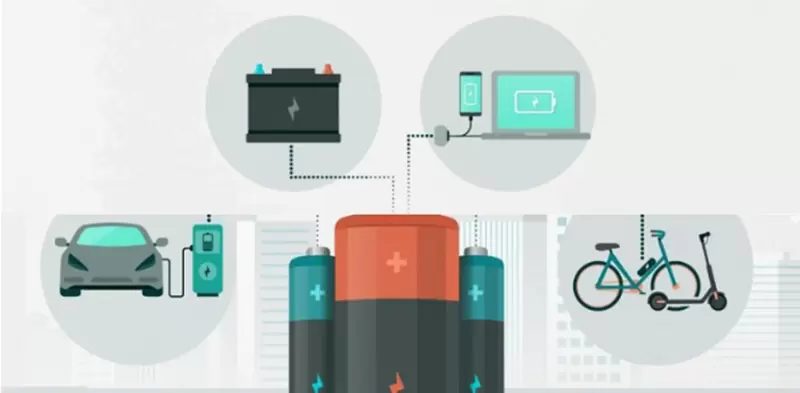
Image from:https://www.pcmarket.com.hk/
In addition, the regulation also requires manufacturers to label products with information such as battery components (battery components), recycled content (recycled content), the product electronic passport (electronic passport) and QR codes. The labeling mechanism will be introduced before 2026, and the QR code system before 2027.
To promote a circular economy and maximize battery benefits, the target recycling rate for portable waste batteries is 63% by the end of 2027 and 73% by 2030; for light vehicle waste batteries the target recycling rate is 51% by 2028 and 61% by 2031; the target for recycling lithium from waste batteries is 50% by the end of 2027 and 80% by 2031; for electric vehicle waste batteries the recovery targets are 16% for cobalt, 85% for lead, 6% for lithium and 6% for nickel.
Spain’s Third Deputy Prime Minister and Minister for Ecological Transition and the Demographic Challenge Teresa Rivera stated that batteries are a key product in the decarbonization process (decarbonization process) and the EU’s move towards zero emissions (zero emissions). To enhance European industrial competitiveness, ensure a successful ecological transition and avoid dependence on third-country supplies of raw materials, many critical raw materials (critical raw materials) should be recovered and reused through waste battery recycling.
The EU’s Four Visions for Batteries: Environmental Sustainability, Waste Management, Circular Economy, and Concrete Recommendations for Implementation
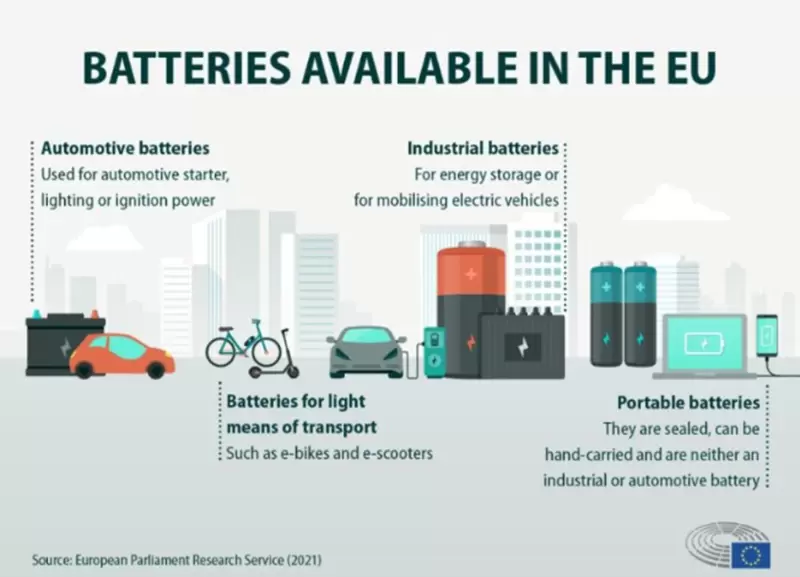
Image from:https://www.pcmarket.com.hk/