Conductive ink
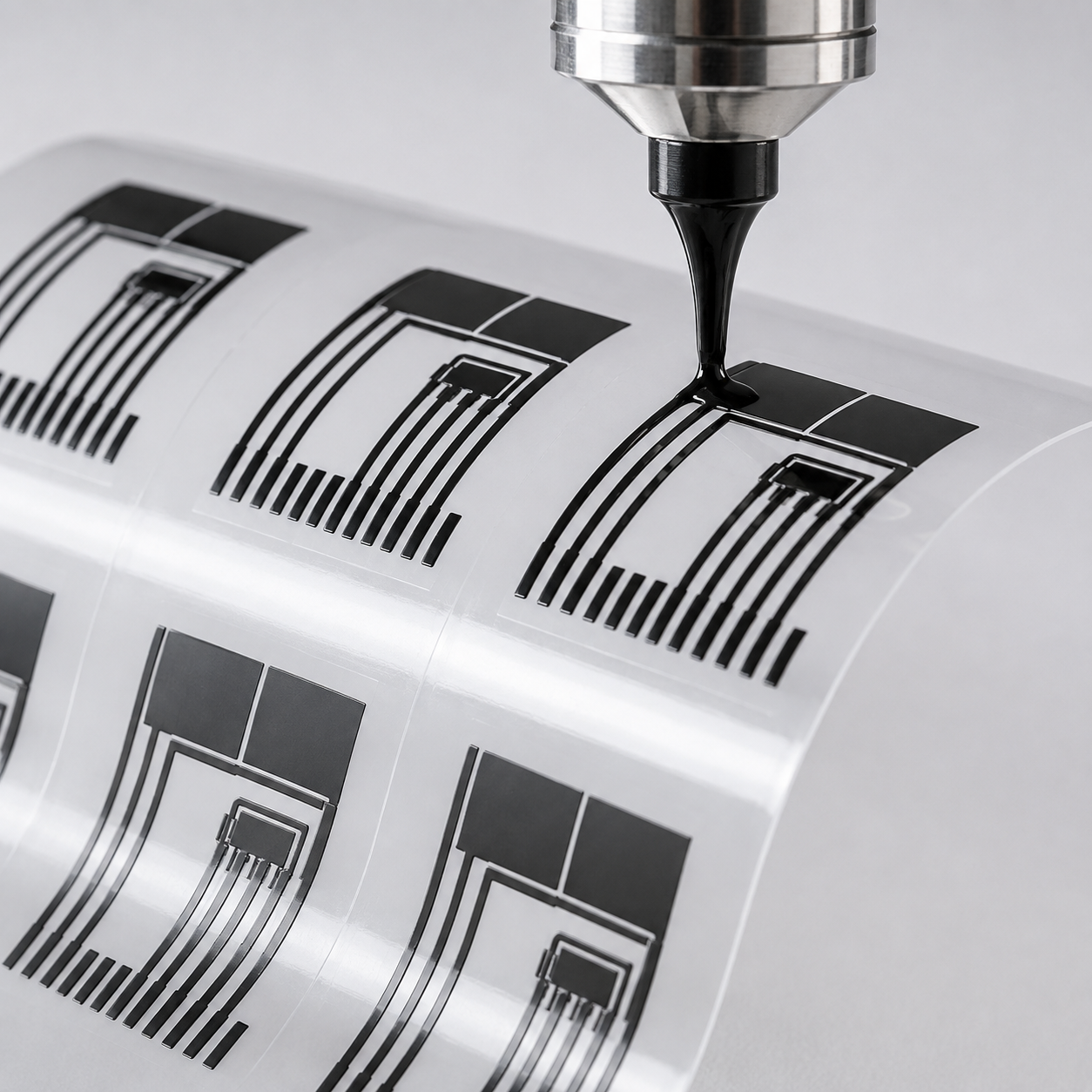
Applying graphene to conductive inks is a highly promising technology in the field of printed electronics (Printed Electronics). Traditional conductive inks often rely on expensive silver powders or oxidation-prone copper powders, while the incorporation of graphene brings a disruptive breakthrough.
Below is a summary of the core advantages and main applications of graphene conductive inks:
1. Core Advantages
-
Exceptional flexibility and bend resistance: Traditional metal-based conductive inks tend to develop microcracks after repeated bending or folding, causing circuit breaks. Graphene has excellent mechanical flexibility; even when repeatedly bent on flexible substrates (such as PET film, paper, or fabrics), it can still maintain stable conductive performance.
-
Chemical stability and oxidation resistance: Copper-based conductive inks are prone to lose conductivity due to air oxidation, whereas graphene’s chemical properties are highly stable and do not oxidize, enabling long-lasting and stable product lifetimes.
-
Optimized cost structure: Compared to traditional silver paste (Silver Paste) that heavily depends on precious metals, graphene, as a carbon-based material, can effectively replace or reduce the amount of silver powder used, significantly lowering the manufacturing cost of conductive inks.
-
Thinness and high transparency potential: Graphene nanosheets are extremely thin, which helps print much thinner circuits and, under certain formulations, can even be applied to the field of transparent conductive films.
2. Main Application Areas
-
Flexible electronics and wearable devices: This is the most commercially valuable application; it can be used for printing flexible printed circuit boards (FPC), physiological sensing circuits in smart garments, and various types of flexible sensors.
-
RFID electronic tags and smart packaging: Using high-speed printing techniques to print graphene inks into RFID or NFC antennas can greatly reduce manufacturing costs for logistics tracking tags and smart packaging for unmanned stores.
-
Membrane switches and touch panels: Widely applied to membrane keys (Membrane Switches) in home appliances, medical instruments, and industrial machines, as well as peripheral conductors for touchscreens.
-
Heating inks: By combining graphene’s electrothermal conversion properties, they heat up quickly and evenly when powered, and are often printed on defogging glass, thermal wear, or heated car seats.